VF-84 Jolly Rogers — the skull and crossbones, and why the Tomcat wears it
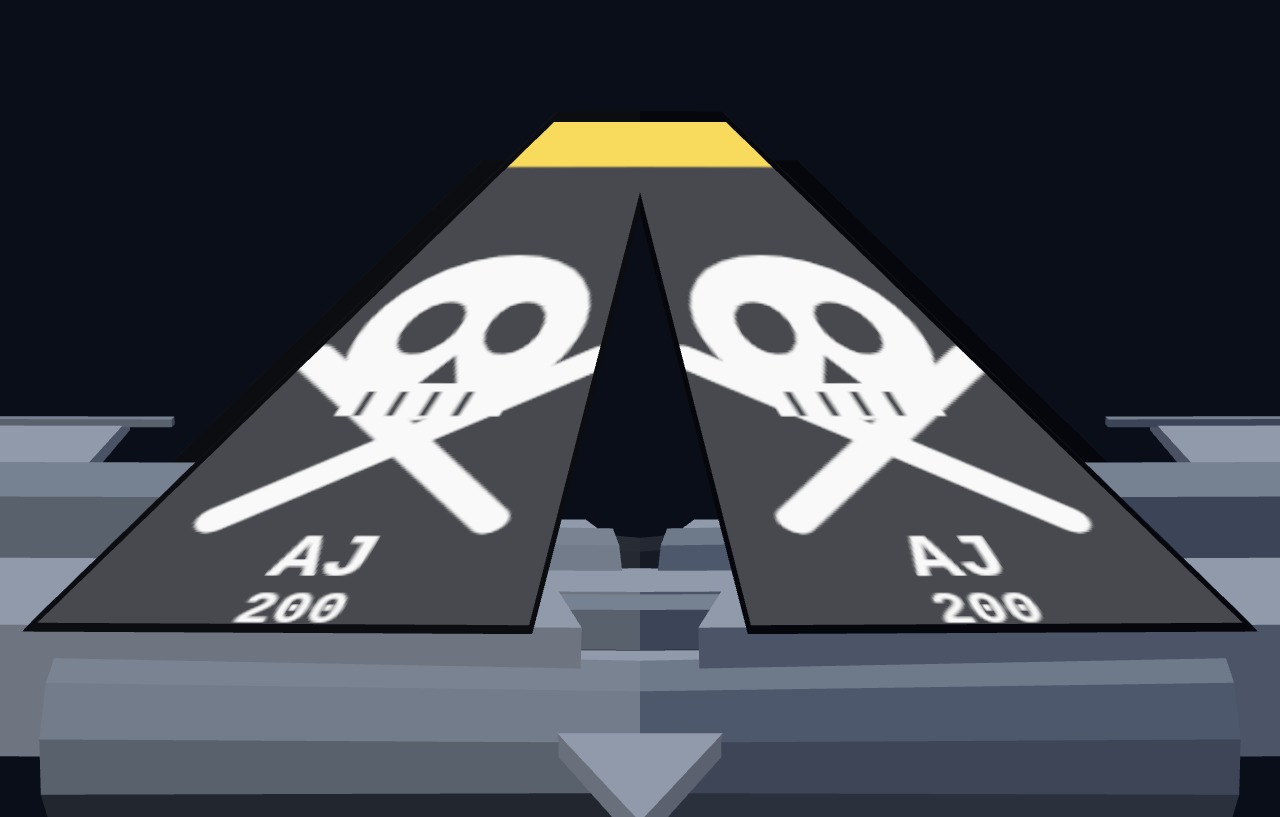
The Tomcat in Hornet Bay isn't wearing just any paint: black tails, a yellow tip, and the skull and crossbones of VF-84, the Jolly Rogers. Here's where that flag came from and how it ends up on the fins.
VF-84 was established at NAS Oceana on 1 July 1955. The skull and crossbones wasn’t originally theirs: it belonged to VF-61, and when VF-61 was deactivated in 1959, a former VF-61 skipper commanding VF-84 asked for the name and the insignia. The request was approved on 1 April 1960. The squadron flew it through the Phantom years and into the Tomcat, and when VF-84 itself was disestablished on 1 October 1995, VF-103 inherited the Jolly Rogers name and markings.
Why the sim’s Tomcat wears it
Hornet Bay is an alternate-history tribute, not a record of who flew what and when. Our F-14 is dressed in a 1978 Jolly Rogers scheme: gull grey over white, black twin fins with yellow tips, and the flag on both outer faces. It is a nod to the squadron’s reputation, nothing more official than that.
The fin art took a few passes. The skull once overhung the swept leading edge; the tail-trim fix cut the flag to the fin’s real outline so the skull stays round and nothing spills over.
In the sim
- Skull and crossbones on both tails, with AJ and 200 at the root of each fin.
- Yellow band at the tip of each fin.
- Four AIM-54 Phoenix in the tunnel, two Sidewinders on the glove pylons.
- Unlocked by earning it: the unlock message reads “Welcome to the Jolly Rogers.” See earn the Tomcat.
- A printable Tomcat model carries the skull on both tails.
Try this: take the Tomcat off the Big E, sweep the wings back with S, and look back at the tails on the way out. Remember the rule: the mission only counts once you are back at the point of origin.
— HB