Wings spread, wings swept — the F-14 flight model in four numbers
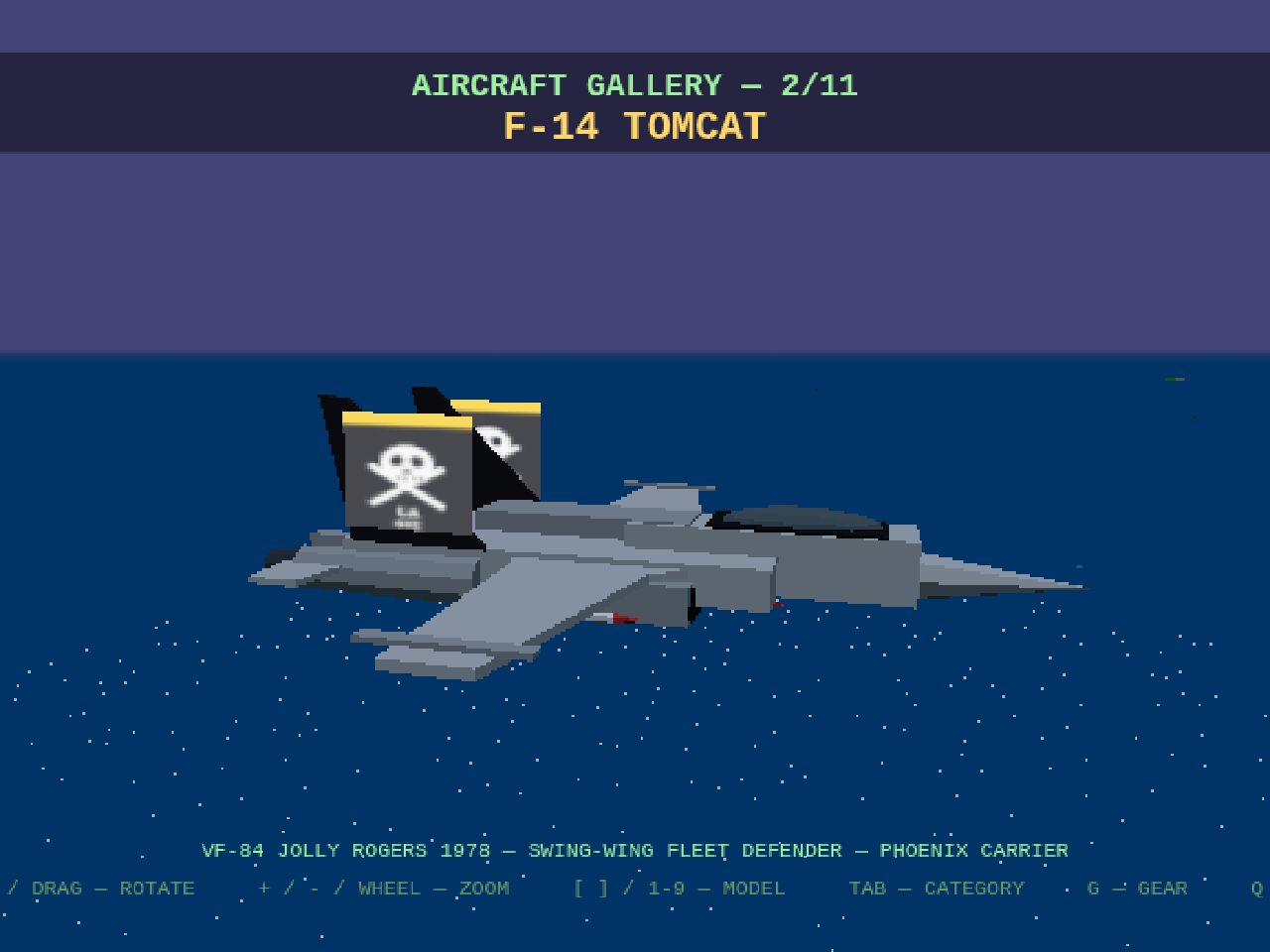
One key, two seconds, and the Hornet Bay Tomcat becomes a different airplane. Here are the four numbers that change when you press S, and why you spread for the boat.
The F-14 gets her own entry in the flight model. Press S and the wings travel between 20° spread and 68° swept, taking about two seconds end to end, and the aero is blended in as they move rather than switched. The base numbers below are wings-spread; the swept column is where she ends up.
By the numbers
- Stall speed: 92 vs 128 m/s. That is roughly 179 kt spread and 249 kt swept. Below stall the nose drops and the airframe sinks, so a swept Tomcat has no business near the ramp.
- Roll authority: 2.9 vs 3.6. Swept she rolls about a quarter harder.
- G limit: 8 vs 9. Swept, she tolerates a little more pull.
- Drag: 0.000132 vs 0.000104. Swept she is slicker, which is the whole point of the dash configuration.
A fifth number does not change: fuel is 30,000, the biggest load of any jet in the hangar, and the ceiling is 15,240 m (50,000 ft). She also burns it: at full military power the tank lasts about 22 minutes, and with the burner lit closer to six and a half.
Why spread for the boat
Swept, the stall speed climbs by 36 m/s, which is the margin you need on final. Spread the wings before you enter the pattern, then drop gear and hook as usual. Our Tomcat introduction covers her boat ops, Earn the Tomcat tells you how to unlock her, and the meatball will tell you if you got it wrong. You can also browse her model on the print bay.
Try this: take off from the Big E, sweep with S and watch the speed tape and roll response change, then spread again and see how slow you can fly before the nose drops.
— HB